Should You Remove Wasps Coming Through Siding Holes Yourself?
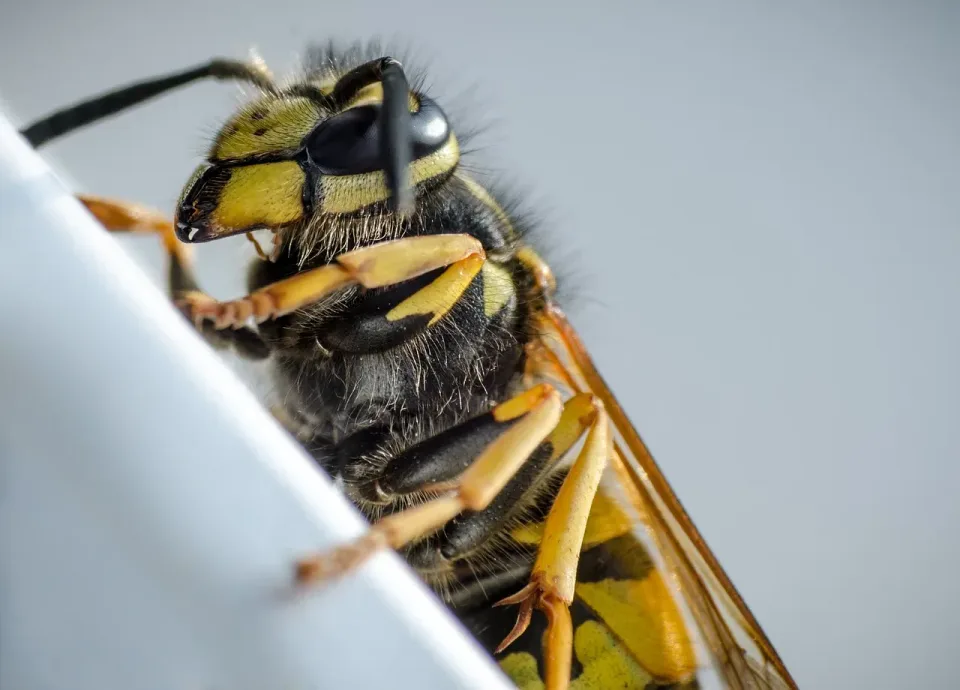
Wasps entering holes beneath siding are a reason to pause before spraying or sealing the opening. If the nest is hidden in a wall, a visible entrance does not show its size or where insects may emerge when disturbed. Stay back and watch the activity from a safe distance.
Eastern North Dakota generally receives more precipitation, so check siding and the surrounding area for water damage without probing the hole. A homeowner near the North Dakota Heritage Center & State Museum in Bismarck can use the same rule: observe, don’t disturb. If wasps keep entering, request an inspection before choosing a removal method.
When should you avoid DIY wasp nest removal?
If wasps are repeatedly disappearing into a siding gap, avoid spraying into the opening, blocking it, or taking the siding apart yourself. A nest may extend beyond the visible hole, and disturbing it can send insects out through the entry point or another gap. That is the practical boundary we use: don’t attempt removal when the nest is concealed, activity is steady, or access would put you close to the opening.
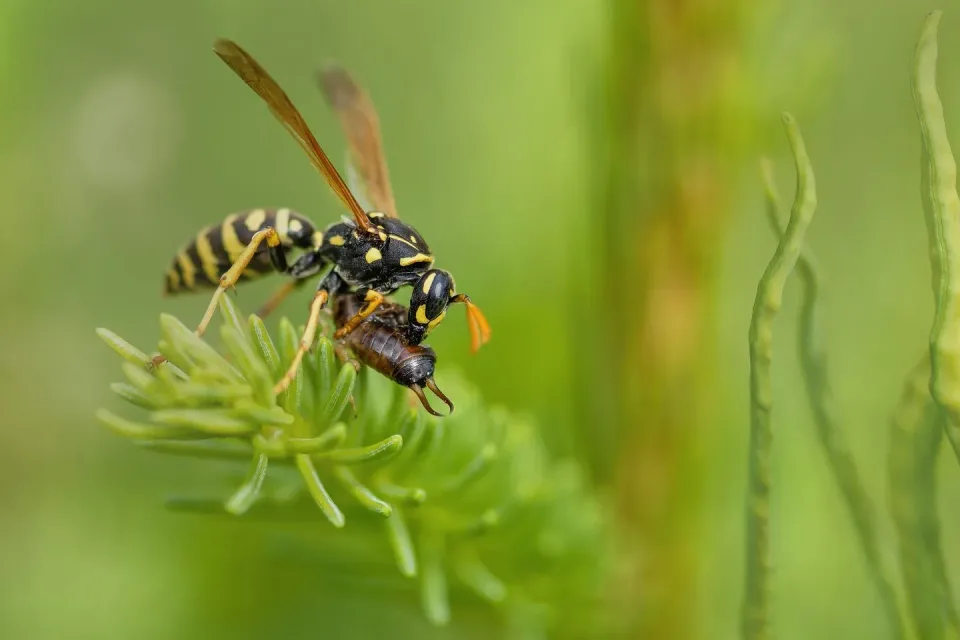
Wasp nest removal begins with identifying the insect and locating the colony as safely as the structure allows. Our wasp nest safety guide approach is to inspect the exterior and consider where the gap leads before choosing a treatment.
North Dakota State University in Fargo is a useful local reference for homeowners seeking extension information, but a hidden nest still needs a site-specific assessment. Don’t seal the hole while wasps are active; that can redirect them into the building.
What does a professional inspect behind the siding?
We look at the entry point, siding condition, nearby trim, and the pattern of insect movement. The goal is to understand access and likely nest location, not just spray the place where a wasp was last seen. On properties near Interstate 94 in North Dakota, as elsewhere, the same inspection steps apply; highway location does not tell us what is behind the siding.
Rainfall varies across eastern and western North Dakota, so moisture exposure and the condition of exterior materials can differ by site. We account for what we can observe rather than assuming every wall or opening is alike.
North Dakota Highway 200 connects communities across the state, but travel corridor or town does not replace a close look at the affected wall. Our crew explains what we found and what we recommend before starting work.
Is DIY treatment reasonable in any case?
DIY may be reasonable only when the nest is clearly exposed, reachable without a ladder or wall disturbance, and the product label specifically supports that use. Even then, follow the label and keep people and pets away as directed. If the colony is inside siding, you cannot confirm the nest location, or activity increases when you approach, stop and call a professional.
We see a common mistake: treating the opening as if it were the whole nest. A surface application may not reach a concealed colony, and blocking the hole can leave insects with no clear exit. North Dakota Museum of Art in Grand Forks and University of North Dakota are local landmarks; for a home in that region, as in Fargo, the decision should turn on nest access and observed activity, not the address.
What should you expect from wasp nest removal?
Ask what the inspection covers, which treatment method is proposed, and whether any siding repair is part of the work. Wasp nest removal is a focused job; it does not automatically include repairing the entry gap. We separate pest treatment from building repair so you know what is being addressed and what remains for a siding contractor or qualified repair professional.
If wasps return after treatment, note where and when you see them rather than reopening the wall. A recheck can help determine whether activity continues at the original entry point or another location.
We serve North Dakota with careful inspections and clear explanations, shaped by more than 11 years working in the state. For a concealed nest, the safest next step is a professional assessment not another dose of spray.
Which Siding-Nest Removal Option Fits the Problem?
The right choice depends on whether wasps are exposed or entering a concealed space, and whether the exterior needs repair afterward.
| Option | Best for | Key detail |
|---|---|---|
| DIY label-directed treatment | Clearly exposed nest reachable from a safe position | Follow all label directions; avoid hidden siding cavities |
| Exterior repair after treatment | A confirmed gap that still needs closure | Ask whether repair is included or requires a separate contractor |
|---|---|---|
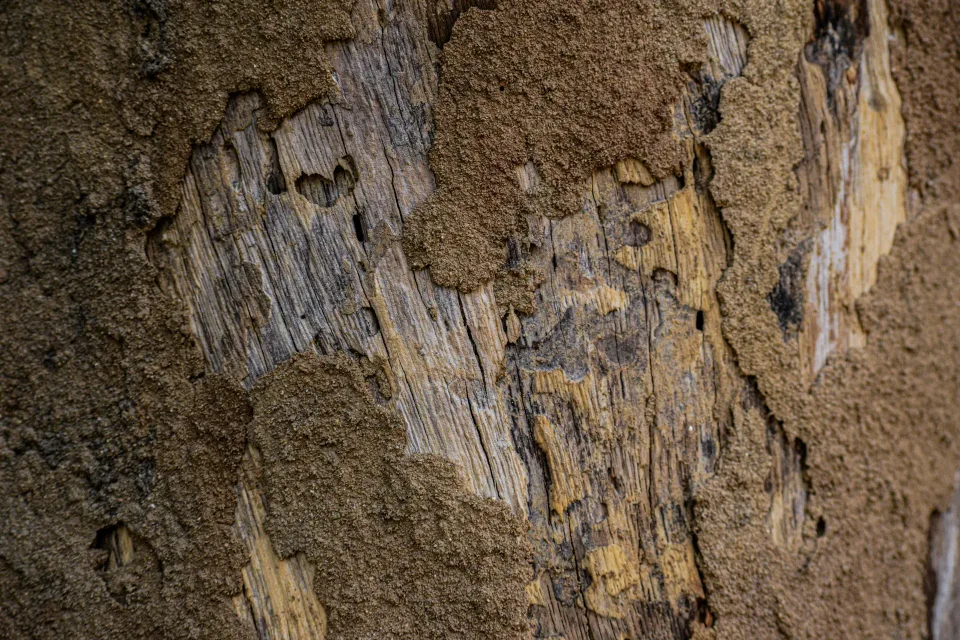
| Termite inspection | Separate concerns about possible termite evidence | An inspection checks for signs of termites; it is not wasp treatment |
Request written inspection findings and treatment scope before work begins. That record makes clear what the technician observed and which areas the proposed service covers.
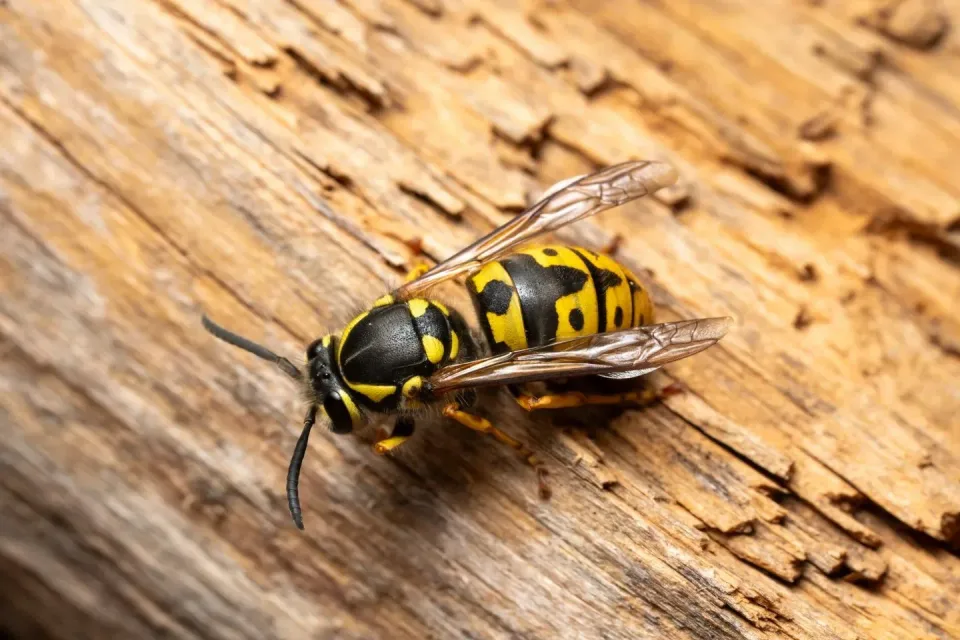
Periodic hail can damage siding and vent covers, so mention any visible impact damage during the inspection. A yellow jacket nest removal job at a Fargo property also needs an on-site assessment; the label alone cannot establish nest height or access.
How Do You Prepare for a Siding-Nest Inspection?
If you notice wasps entering a siding gap, keep your distance and arrange an inspection rather than opening the wall. Before the visit, note where insects enter and when activity is most visible. The Red River of the North helps orient local residents, but the technician needs the exact affected wall and access details at your property.
-
Record the signs: Note the entry location and visible activity without approaching or blocking the hole.
-
Secure pets: Keep pets away during inspection and treatment so they do not approach the active area.
-
Share access details: Tell the technician about relevant attic, utility, or exterior access points.
-
Report prior products: Describe any pesticide already used and where it was applied.
-
Review instructions: Follow any product-label reentry interval provided after treatment.
-
Ask about follow-up: Confirm whether a later inspection is recommended based on observed activity.
Freeze-thaw cycles stress caulking and exterior seals, so ask whether the visible gap may need repair after treatment. The Grand Forks Greenway and Chahinkapa Zoo in Wahpeton are local landmarks, but your inspection plan should reflect the home’s actual siding and access.
Get a Clear Plan for Wasps Behind Siding
Wasps entering holes beneath siding should not be treated as an exposed nest if the colony may be inside the wall. Avoid spraying into or sealing an active opening; arrange an inspection when activity is persistent or access is uncertain.
North Dakota residents near Downtown Bismarck or Downtown Grand Forks can take the same practical first step: record where wasps enter and keep people away from that area. Our crew explains the findings, recommended treatment, and expected scope before work begins.
For a professional assessment, contact North Dakota Pest Pros about wasp nest removal.